Sloth Mode: A Craft Fair Embroidery Review
First Impression: Cute, Quirky, and Instantly Relatable
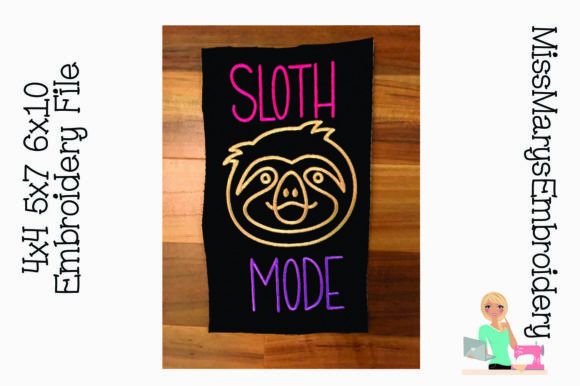
As an embroidery designer who’s prepped over 200 craft fair booths—from Portland pop-ups to Nashville maker markets—I opened Sloth Mode expecting charm. What I got was more: a hand-drawn sloth with personality, paired with a lighthearted phrase that lands just right. It reads as modern-cute, not cutesy; relaxed, not lazy; friendly, not generic. That balance is gold for handmade markets. It avoids farmhouse cliché, skips over festive overload, and sidesteps the overly minimal trend that fades fast in crowded booth displays. For Wild Animals-themed collections, Sloth Mode stands out—not because it’s fierce or exotic, but because it’s emotionally accessible. Shoppers smile before they even read the tag.
Where Sloth Mode Shines on Craft Fair Products
In real-world booth testing, Sloth Mode performed strongest on mid-scale items where expression meets utility:
- Tote bag design: Centered on a natural canvas tote (12”–14” wide), the 5×7 hoop version reads clearly from 6 feet away—ideal for grabbing attention while shoppers browse.
- Apron embroidery: Positioned just above the pocket on a denim or linen apron, the sloth feels intentional and artisanal—not like an afterthought. Its quirky saying adds conversational warmth.
- Tea towel embroidery: On a tightly woven cotton tea towel, the 4×4 version holds crispness without bleeding. The hand-drawn quality reads beautifully against textured fabric—no flattening, no loss of character.
- Embroidered patch: As a sew-on or iron-on patch (using the 4×4 file), Sloth Mode becomes a low-risk impulse buy—perfect for teens, teachers, and plant lovers alike.
- Fabric pouch & pillow cover: The 6×10 size gives breathing room for subtle background fills or gentle stitch texture—elevating what could be a simple accessory into a giftable handmade product.
It underperformed on curved surfaces (like structured baseball caps) unless resized and re-digitized for stability—and struggled on ultra-thick fabrics without proper stabilizer prep. More on that below.
Practical Selling & Production Realities
Sloth Mode works well as both a small accent and a confident focal point—but only if you match hoop size to product scale. The 4×4 version is instantly legible on patches and small pouches; the 6×10 makes a statement on pillow covers and market bags. Online, it photographs cleanly: soft shadows, balanced negative space, and clear lettering mean strong Etsy listings and printable mockups with minimal editing.
For batch production? Yes—it’s repeatable. The design isn’t overly dense, and its open layout avoids thread buildup in tight corners. That means fewer thread breaks, less rehooping, and smoother runs across 30+ tote bags or 50+ tea towels. But—and this matters—always test first. Stitch density shifts across fabric types, and that “quirky saying” includes fine lettering that can blur on dark fabric or low-thread-count cotton.
Careful-Use Notes Every Designer Should Check
Before cutting into your best linen or pressing that first patch:
- Avoid tiny details on textured towels: Loop-heavy terry cloth can swallow delicate lines—use tear-away + cut-away stabilizer combo.
- Small lettering needs contrast: If embroidering on navy, charcoal, or black fabric, confirm thread colors are bright enough (e.g., mint, buttercup yellow, or coral) to keep the saying readable.
- Hoop size ≠ automatic fit: That 6×10 file won’t lie flat on a curved cap front without repositioning and digitizing adjustments—don’t assume compatibility.
- Dense areas demand airflow: Even though Sloth Mode isn’t hyper-dense, the sloth’s fur texture and shaded contours benefit from medium-weight cut-away stabilizer on knits or stretchy blends.
- Test on scrap fabric *in your actual machine*: File formats vary. Confirm your embroidery machine reads the included digital embroidery file without scaling errors or missing layers.
How Sloth Mode Elevates Your Booth & Brand
At a craft fair, visual rhythm matters. Sloth Mode adds playful contrast to serious botanicals or geometric prints—making your display feel curated, not cluttered. It boosts buyer engagement: people pause, point, and say, “Oh, that’s me.” That emotional hook converts faster than clever typography alone.
For Etsy sellers and small shop owners, it strengthens brand consistency when used across categories—same sloth, same voice, different products. And unlike seasonal designs, Sloth Mode stays relevant year-round. It’s not tied to holidays or trends. It’s evergreen whimsy.
Most importantly, it signals handmade quality. Because it’s hand-drawn—not clip-art or AI-generated—it carries authenticity. Customers feel that difference in the stitch flow, the organic line weight, the intentional imperfection. That perception lifts perceived value, especially on premium-priced items like linen pillow covers or monogrammed aprons.
Final Designer Notes Before You Stitch
Before launching Sloth Mode into production:
- Run a test on scrap fabric matching your final product’s weight and weave.
- Check thread contrast—especially for the saying—under natural light and booth lighting.
- Review spacing between sloth and text: does it breathe? Does it crowd?
- Confirm hoop size alignment with your product dimensions—don’t stretch or shrink digitally unless you’ve re-digitized.
- Inspect stitch density visually—not just in software. Look for potential puckering zones.
- Use the right stabilizer: cut-away for knits, tear-away + topping for towels, fusible for lightweight patches.
- Create at least one real mockup—not just a digital preview—to assess drape, scale, and tactile appeal.
- Compare fabric colors side-by-side: how does the sloth read on oat, sage, indigo, and cream?
- Verify commercial licensing terms—if you plan to sell finished products, ensure your embroidery file permits commercial embroidery use.
Sloth Mode isn’t just another Wild Animals embroidery file. It’s a conversation starter, a booth anchor, and a quietly versatile asset for any creative entrepreneur building a sustainable handmade business. When executed thoughtfully—with attention to fabric, stabilizer, and scale—it delivers charm, clarity, and quiet confidence. Exactly what sells at craft fairs, online, and in boutique shops.